When to Replace HVAC Components: A Guide to Compressors, Motors, and Key Parts
Your air conditioner stopped cooling, or it's making a sound that wasn't there last week. Maybe it runs constantly but your home never reaches the set temperature. Before you call anyone or touch anything, you need to know whether you're looking at a part that can be swapped out or a system that's deeper into failure than a single repair can fix. After handling these calls across South Florida for over two decades, we can tell you that the difference between a smart repair and a costly mistake usually comes down to understanding what each component actually does and how to read the signs it gives you before it quits.
What Each Component Does and Why It Fails
Understanding what you're replacing starts with knowing what each part actually does inside the system.
Compressor
The compressor is the heart of your refrigeration cycle. It pressurizes refrigerant so heat can be transferred out of your home. In Fort Lauderdale, compressors run under some of the highest ambient heat loads in the country, which means they cycle at near-maximum capacity for eight to ten months of the year. That kind of runtime compresses the typical compressor lifespan from a national average of 15 to 20 years down to closer than 10 to 15 years in this climate. When a compressor starts pulling higher-than-rated amperage, trips the breaker, or makes a hard clunking sound on startup, those are signs it's struggling against internal wear. A failed compressor is the most expensive single component replacement in any residential system.
Condenser and Evaporator Fan Motors
These motors keep air moving across the coils where heat exchange actually happens. A condenser fan motor that slows down or stops causes refrigerant pressure to spike and forces the compressor to work harder. We see motor failures spike during the summer months in South Florida, often tied to moisture intrusion, corroded wiring connections, or bearings that dried out from heat stress. A replacement motor typically lasts 8 to 12 years under normal conditions, but coastal air and salt exposure near Broward County neighborhoods can shorten that window.
Capacitors
Capacitors store electrical energy and give motors the jolt they need to start and run. A failing capacitor is one of the most common service call findings in Florida. When a capacitor weakens, the motor strains on startup and can overheat within a single season. Capacitor replacement is one of the few repairs most homeowners can safely plan around, though the discharge risk from a charged capacitor makes it a task best left to a licensed technician.
Contactors
A contactor is an electrically controlled switch that opens and closes to allow power to flow to the compressor and fan motors. In humid environments like Fort Lauderdale, contactor pitting from electrical arcing happens faster than in drier climates. A pitted contactor causes voltage irregularities that stress every downstream component. Replacement is inexpensive relative to what a failed contactor can do to a compressor over time.
Metering Devices and TXVs
The thermal expansion valve or fixed orifice metering device controls refrigerant flow into the evaporator coil. A failing TXV causes flooding or starving of the coil, leading to ice buildup, poor cooling, and compressor slugging. This is a component that most homeowners never think about but that technicians evaluate carefully when a system is underperforming without an obvious cause.
Symptom and Cause Diagnostic Table
| What You're Seeing | Most Likely Cause | Severity | First Step to Take |
|---|---|---|---|
| System runs but no cooling | Failed compressor or low refrigerant | High | Check for ice on suction line, call technician |
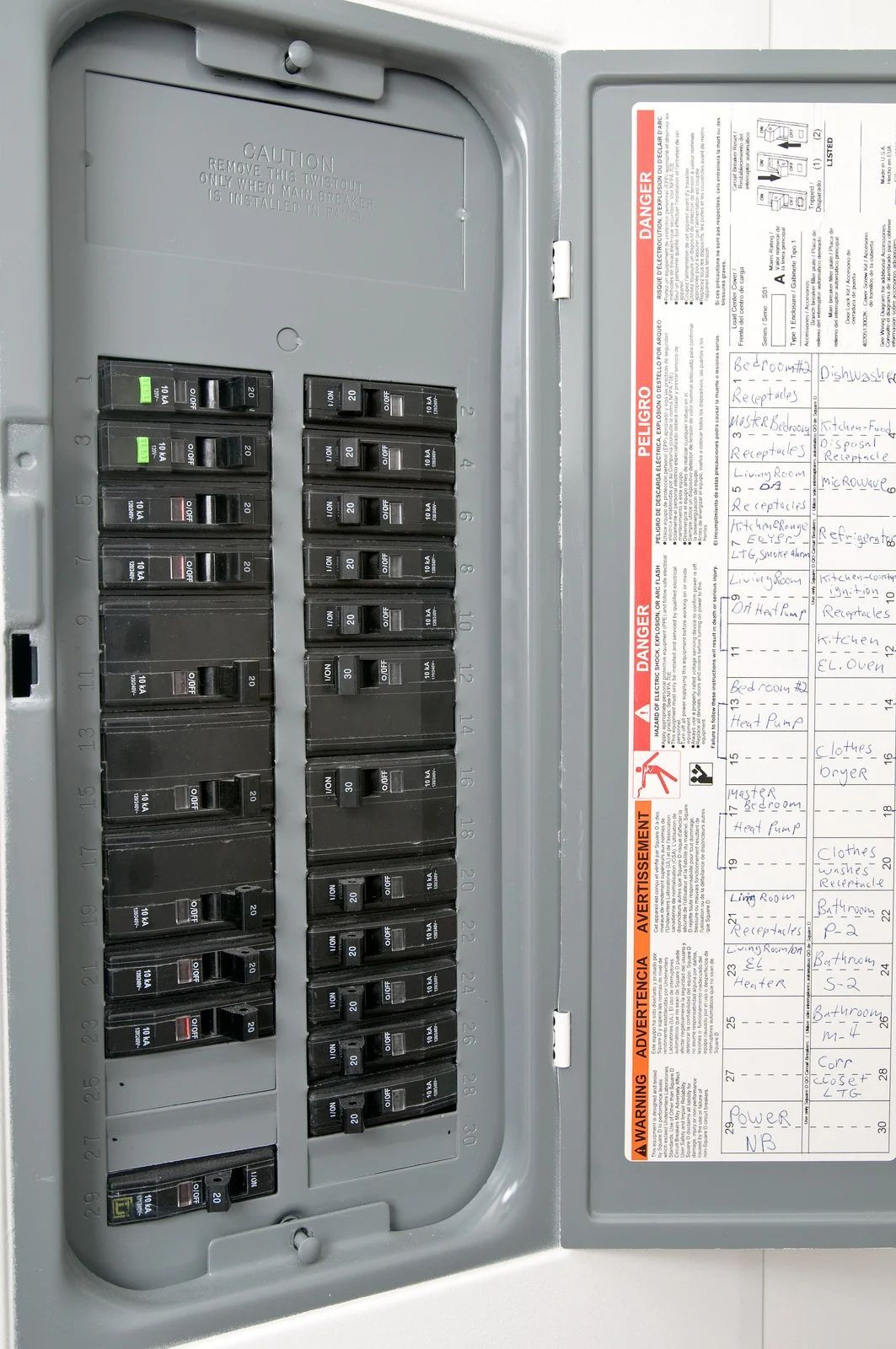
| Outdoor unit fan not spinning | Capacitor or fan motor failure | High | Shut system off to protect compressor |
| Breaker trips repeatedly | Compressor drawing excess amperage | High | Do not reset more than once, call technician |
| Loud clunk on startup | Hard starting compressor | Medium | Check capacitor first before assuming compressor failure |
| Ice on evaporator coil | Low airflow or TXV failure | Medium | Check and replace filter, inspect vents for blockage |
| Chattering sound from outdoor unit | Failing contactor | Medium | Visual inspection of contactor for pitting or burning |
| Weak airflow at vents | Blower motor wearing out | Medium | Check motor amperage draw, inspect belt if applicable |
| System short cycling | Oversized unit, refrigerant issue, or thermostat | Low to Medium | Check filter and refrigerant charge |
| Burning smell from unit | Electrical insulation failing on motor windings | High | Shut system off immediately, call technician |
| High energy use without comfort change | Compressor efficiency loss or refrigerant undercharge | Medium | Schedule a full system performance test |
How We Diagnose Component Failures in the Field
On service calls in Fort Lauderdale, we start with electrical measurements before we open anything. A clamp meter across the compressor circuit tells us within seconds whether the draw is within the nameplate rating. A compressor pulling 20 to 30 percent above its rated amperage is almost always at end of life. Capacitor testing with a digital capacitance meter follows immediately because a weak capacitor mimics compressor failure symptoms and costs a fraction of the price to address.
We check refrigerant pressures next using a calibrated gauge manifold and cross-reference suction and head pressure against outdoor ambient temperature. In Fort Lauderdale summers, outdoor ambient often exceeds 95 degrees, which pushes head pressure into ranges that can look abnormal to someone not accounting for local conditions. Per manufacturer tolerances, a properly charged R-410A system running at 95-degree ambient should show high-side pressure around 415 to 430 psi. Readings outside that window point toward refrigerant charge issues or compressor inefficiency.
We also pull the contactor and inspect the contact points visually. Salt air accelerates pitting in coastal zip codes, and a contactor that looks fine to the eye can be dropping voltage under load. A load voltage test confirms whether the contactor is passing full power to the compressor.
Repair or Replace: How to Make the Right Call
The decision to repair or replace a component depends on age, system age, and the repair history behind it.
| Factor | Repair Makes Sense | Replace Makes Sense |
|---|---|---|
| Component age | Under 7 years | Over 10 years |
| System age | Under 10 years | 12 years or older |
| Repair history | First failure | Second or third failure |
| Refrigerant type | R-410A | R-22 (being phased out) |
| Energy performance | System runs efficiently | Bills rising without clear cause |
| Compressor warranty | Under manufacturer warranty | Warranty expired |
In South Florida, where systems run nearly year-round, component wear accumulates faster than in northern climates. A compressor that fails at year 11 on a 14-year-old system rarely justifies an expensive repair. A capacitor or contactor failure on a 5-year-old system with no prior issues is a straightforward repair with years of remaining value in the equipment.
Maintenance That Extends Component Life
Monthly: Replace or inspect the air filter. A clogged filter raises evaporator static pressure and forces the blower motor to work harder.
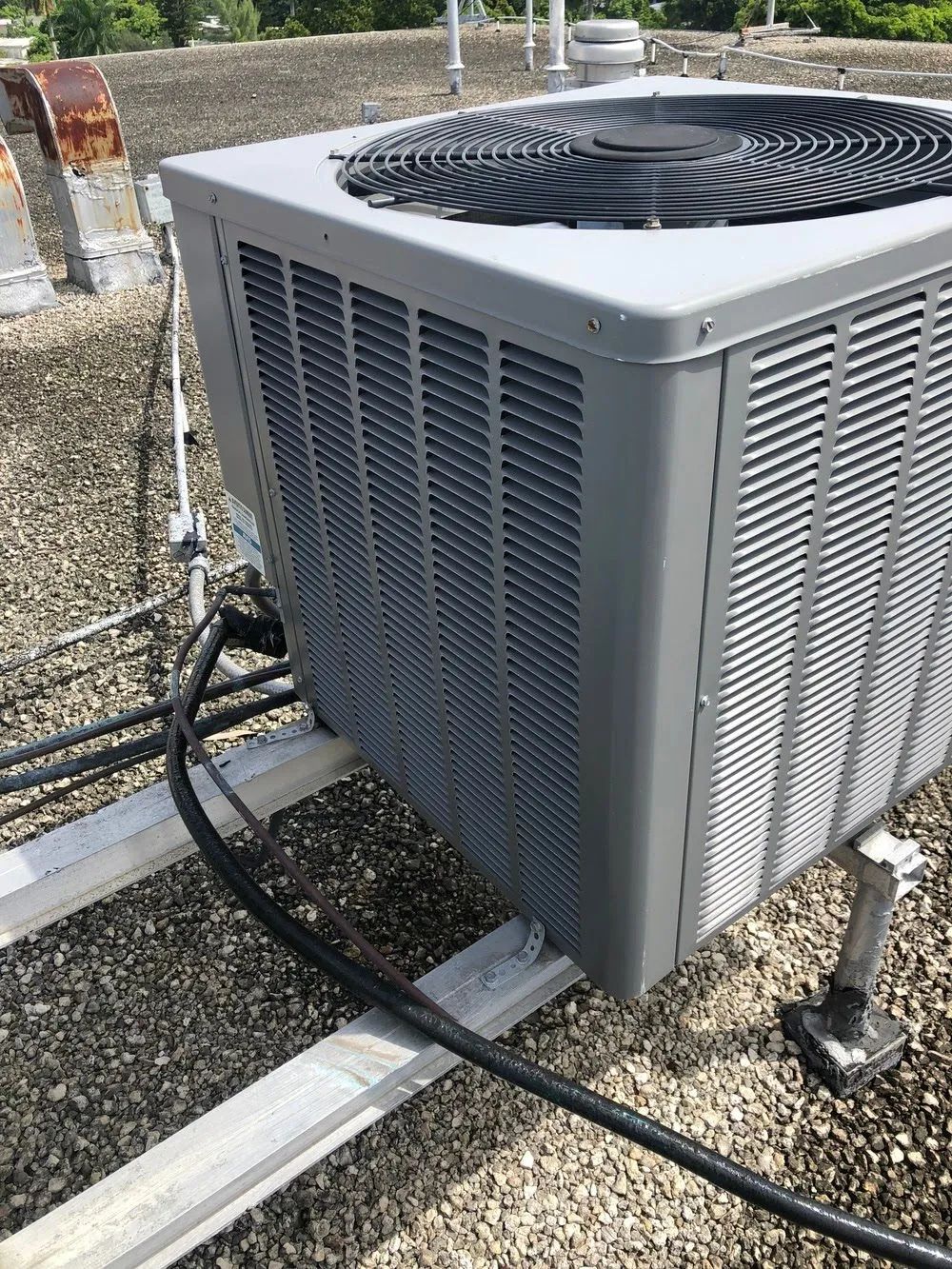
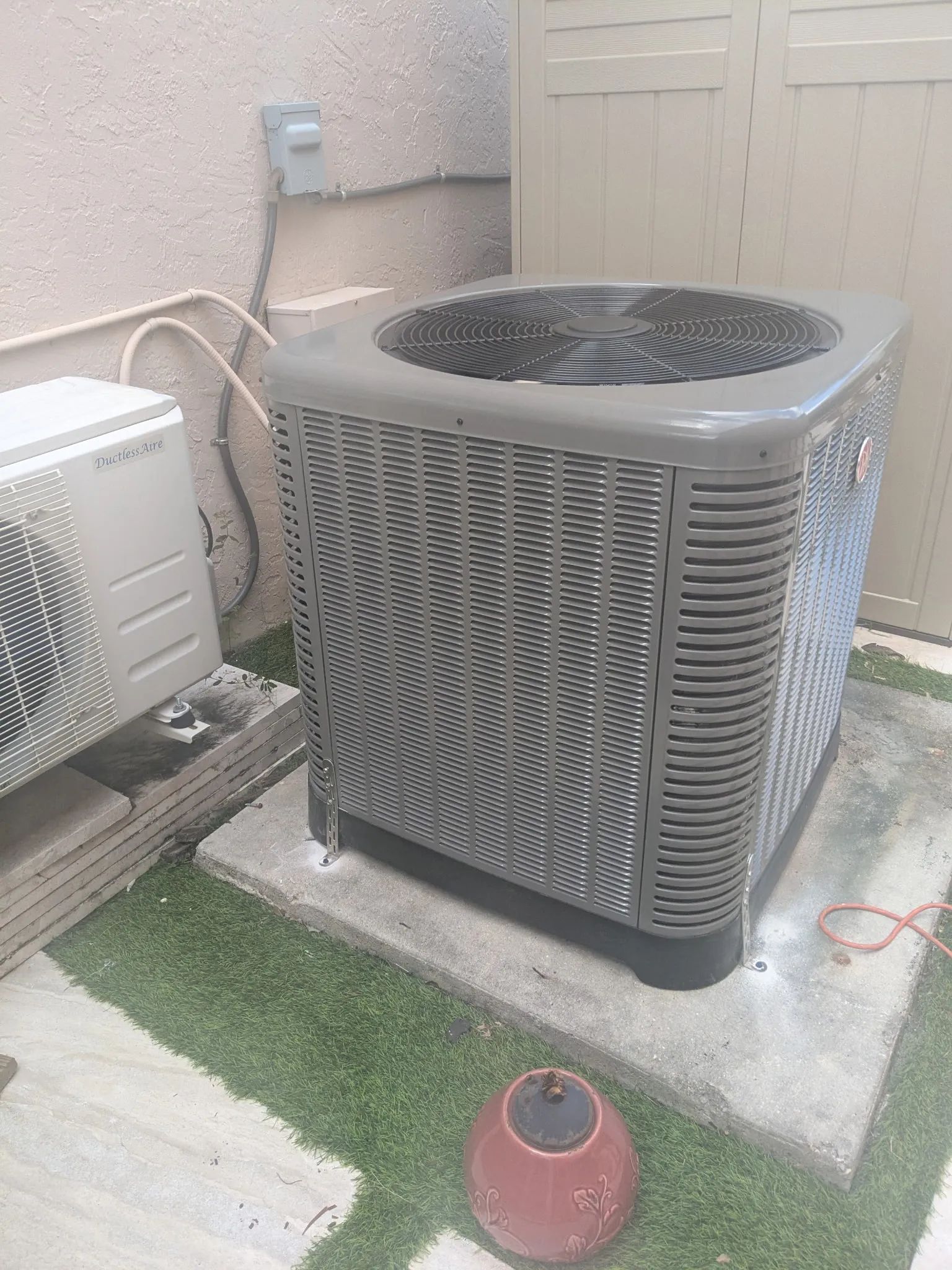
Quarterly: Clear debris from around the outdoor condenser unit. In South Florida, palm debris, mold growth, and storm residue collect on condenser fins and restrict airflow.
Annually: Have a licensed technician test capacitor microfarad readings, check contactor contact condition, verify refrigerant charge, clean the evaporator and condenser coils, and measure motor amperage on both the blower and condenser fan.
Long-term: At year 8 to 10 for any system in Fort Lauderdale, budget for a system efficiency assessment. Components that are technically functioning may be consuming 15 to 20 percent more energy than spec because of cumulative wear. That assessment often determines whether you repair forward or plan a system upgrade.
Frequently Asked Questions
What is the average lifespan of an HVAC compressor in Florida?
Nationally, residential compressors last 15 to 20 years. In South Florida, near-continuous runtime, high ambient heat, salt air, and humidity reduce that range to 10 to 15 years. Annual maintenance including refrigerant charge verification and coil cleaning is the most reliable way to reach the upper end.
Is it safe to run my air conditioner if the outdoor fan motor is not spinning?
No. Shut the system off immediately. Without the outdoor fan moving air across the condenser coil, head pressure climbs rapidly and the compressor overheats within minutes. Running the system in this condition risks destroying the compressor, which costs significantly more to replace than the motor.
How long does it take for salt air to damage HVAC components in Fort Lauderdale?
Salt air accelerates corrosion on contactors, capacitor terminals, and coil fins faster than most homeowners expect. Properties within a mile of the Atlantic can see component-level corrosion in as little as 4 to 5 years. Annual inspections catch this early before corrosion spreads to more expensive parts.
How often should capacitors and contactors be inspected on Florida HVAC systems?
Every annual maintenance visit should include capacitor and contactor inspection. For coastal Fort Lauderdale properties within a half mile of the water, a mid-season check in May or June adds meaningful protection. Capacitors reading below 90 percent of rated microfarad value should be replaced before full failure.
Serving Fort Lauderdale With Honest Expert HVAC Repairs
Knowing whether to repair or replace an
HVAC component
comes down to reading the right signals at the right time. In Fort Lauderdale, where systems face some of the most demanding runtime conditions in the country, that decision carries more financial and comfort consequences than it does in most markets. At America's Technical Service, Inc., we bring over 20
years of field experience diagnosing and replacing compressors, motors, capacitors, and refrigerant system components across Fort Lauderdale and surrounding communities including Davie, Plantation, Hollywood, Dania Beach, and Pembroke Pines. If your system is showing any of the symptoms described here, reach out to us for a diagnostic evaluation before a manageable repair becomes a full system replacement.